Japan, But Make It Life-Changing: Our First Trip (and Everything We Learned the Hard Way)
There are trips you take… and then there are trips that rewire your brain a little bit. Japan falls firmly into the second category. This wasn’t a “book it and wing it” kind of vacation. We spent months researching—scrolling through Reels, bookmarking restaurants we’d probably never find again, comparing hotels, studying train maps like we were prepping for a final exam. And honestly? That prep made all the difference. If you’re planning a trip to Japan, here’s everything we learned—what to do, what not to do, and the stuff no one tells you until you’re already there.
TRAVELJAPAN
Ashley and Nate
4/6/20266 min read
We knew we were in trouble—in the best possible way—somewhere between our tenth late-night scroll through travel reels and our fifth “Okay, but this hotel might be the one” conversation.
What started as a casual “we should go to Japan someday” quickly spiraled into months of research that felt less like planning a vacation and more like preparing for a beautifully orchestrated expedition. Our evenings became a ritual: one of us deep in restaurant reviews, the other mapping train lines like a part-time transit engineer, both of us pausing every few minutes to say, “Wait… add this to the list.”
Somewhere along the way, Japan stopped being a destination and started becoming an idea—one built on precision, mystery, and just enough chaos to keep things interesting.
By the time we boarded our flight, we had a carefully curated list of neighborhoods, must-try foods, backup restaurants for the must-try foods, and a mild but healthy fear of getting lost in a subway system rumored to have its own gravitational pull. We felt prepared… but also quietly aware that Japan was the kind of place that doesn’t fully reveal itself through research alone.
And then we landed.
Within hours, we were gliding through a silent train station full of people, ordering breakfast from a convenience store that somehow outperformed most cafés back home, and realizing—very quickly—that no amount of planning quite prepares you for a place where everything just… works.
This trip wasn’t just about seeing Japan.
It was about experiencing a version of the world that feels slightly more thoughtful, impossibly efficient, and, at times, almost surreal.
And it begins long before your plane ever leaves the ground.
✈️ Before You Even Take Off: A Love Letter to Preparation (Trust Me on This)
There are two types of travelers: those who prepare… and those who spend their first 48 hours abroad mildly spiraling in a train station.
Let’s gently nudge you toward the former.
1. The Suica Card: Your Golden Ticket to Civilization
If you possess an iPhone, consider yourself among the chosen. Add a Suica card directly to your Apple Wallet and step confidently into a life free of ticket machines, confusion, and existential dread.
Whatever you do—do not download the Suica app. It exists, yes. Is it helpful? About as much as a chocolate teapot.
With your Suica card, you will:
Glide through train gates like a local who has somewhere important to be
Pay for taxis without fumbling for cash
Purchase snacks, drinks, and the occasional “what is this and why is it delicious?” item at convenience stores
Casually tap your way through life with the elegance of someone who has it all figured out
No tickets. No lines. No drama.
If you don’t have an iPhone… you will become intimately familiar with ticket machines. Consider it cultural immersion.
2. Your Digital Survival Kit
Before departure, arm yourself with the following apps—your modern-day compass, translator, concierge, and occasional savior:
DiDi – Immaculate rides, polite drivers, and a blessing when jet lag renders you temporarily useless
Payke – Scan any barcode and suddenly you’re fluent in ingredients (vital when everything looks delicious but slightly mysterious)
SmartEX – Your gateway to the Shinkansen, aka the most civilized way to travel at 200 mph
Klook – For booking everything from tea ceremonies to “how did we get front row seats?” moments
Tabelog – Where locals actually rate restaurants (translation: this is where the good stuff lives)
3. A Few Words Go a Long Way
You don’t need to be fluent—just thoughtful.
A simple:
Arigatou gozaimasu (thank you)
Hello
Excuse me
I’m sorry
Will earn you smiles, patience, and occasionally better service. Effort, in Japan, is its own language.
🛬 Arrival: The Case for Haneda (A Strong One)
We arrived via Haneda Airport, flying ANA Premium Economy—a decision we would make again without hesitation and possibly a small celebratory toast.
Seats spacious enough to actually resemble comfort
Service so attentive it borders on telepathic
An atmosphere that whispers, “you’ve made an excellent life choice”
Now, the practical magic:
Haneda vs. Narita
Closer to central Tokyo (critical when you haven’t slept properly in 14 hours)
Faster into the city
Effortlessly navigable
Should you arrive early, slightly delirious, and in possession of more luggage than dignity, do the following:
Open DiDi
Make your way to Departures (2nd floor)
Call a ride
It is, quite simply, the kindest thing you can do for yourself.
🏙️ Tokyo: A Masterclass in Controlled Chaos
Tokyo is not just large—it is unfathomably large. A city of roughly 38 million people that somehow operates with the grace of a well-rehearsed ballet.
You will notice:
No trash (despite the near absence of trash cans)
No unnecessary noise
No visible disorder
By day three, you may begin quietly re-evaluating your home country. This is normal.
📍 Where You Stay Matters More Than You Think
Tokyo rewards strategic positioning.
Neighborhoods worth your attention:
Asakusa – Old-world charm and temple-lined mornings
Shinjuku – Electric, chaotic, alive well past your bedtime
Ginza – Polished, refined, and quietly luxurious
Chuo (Tsukiji) – A love letter to food
Yokohama – Slightly off the beaten path, delightfully less English
We chose APA Hatchobori Ekimae Premiere, which offered:
A subway entrance so close it felt like cheating
A quieter atmosphere (a gift in Tokyo)
A perfect launch point for daily adventures
🚇 The Art of Getting Around
At first glance, Tokyo’s transit system resembles a beautifully designed puzzle.
Then it clicks.
Google Maps will guide you admirably—though occasionally with the confidence of someone who is… slightly wrong. Use it as a guide, not gospel.
Your Suica card will:
Tap you in
Tap you out
Work across trains, buses, and beyond
One note: always complete your journey. If you forget to tap out, your Suica will politely lock you out of society until a station attendant restores order.
In Tokyo, distance is irrelevant. Efficiency is everything.
🍱 Convenience Stores: The Unexpected Culinary Affair
You will, without question, fall in love with:
7-Eleven
FamilyMart
Lawson
These are not convenience stores. They are institutions.
Inside, you’ll find:
Food that is shockingly fresh
Options that are dangerously affordable
An entire ecosystem of snacks you didn’t know you needed
Must-try indulgences:
Mini pancakes filled with butter and maple syrup (borderline emotional experience)
Egg sandwiches of unreasonable perfection
Onigiri in all its humble glory
Iced coffee that puts most cafés to shame
Frozen treats for moments of joy
Given that many restaurants open late, these places will become your morning ritual, your midday rescue, and your late-night companion.
🚶♂️ Walking in Tokyo: A Competitive Sport
Expect to walk. A lot.
We averaged 23,000 steps a day, and not the leisurely, “let’s window shop” kind.
This is:
Fast
Focused
Synchronized with the rhythm of millions
If you must stop, step aside. Abrupt halts are the urban equivalent of slamming on the brakes on a highway.
🙏 Cultural Grace Notes
Japan runs on quiet respect.
Speak softly on trains
Keep elevator conversations to a minimum
Carry your trash until you find a proper place for it
Move with awareness of others
It’s not just cleanliness—it’s intention. And it’s contagious.
🍸 Golden Gai: Where Tokyo Gets Intimate
In the neon glow of Shinjuku lies Golden Gai—a labyrinth of narrow alleys and impossibly small bars.
Imagine:
Doorways leading to six-seat worlds
Hundreds of tiny establishments, each with its own personality
Evenings that begin as strangers and end as stories
Yes, there’s often a cover charge. Yes, you’ll be expected to order.
And yes—it is absolutely worth it.
If you happen upon a second-floor bar with a guitar-shaped door handle… go in. Some experiences are better left unexplained.
⛩️ Kyoto: Where Time Slows (Just Enough)
Kyoto feels like an exhale.
Still vibrant, still alive—but softened. Layered with history, tradition, and a quiet kind of magic.
Also home to a train station so vast it feels like a city within a city.
Kyoto Essentials
🍣 Sushi to Fuji
Reserve early. This is not a place you “pop into.” It is a commitment—and a rewarding one.
🌄 Fushimi Inari Shrine
Go before sunrise. Yes, it’s early. Yes, it’s worth it.
Stop at 7-Eleven (of course), gather your provisions, and begin your ascent.
Then—break away from the main path.
What you’ll find:
Hidden shrines
Whispering bamboo groves
A kind of stillness that feels borrowed from another world
It transforms from a tourist destination into something quietly profound.
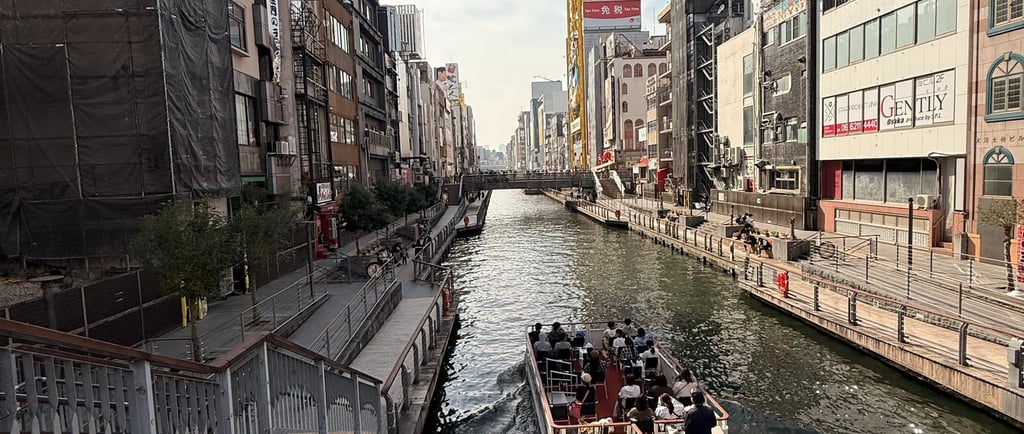
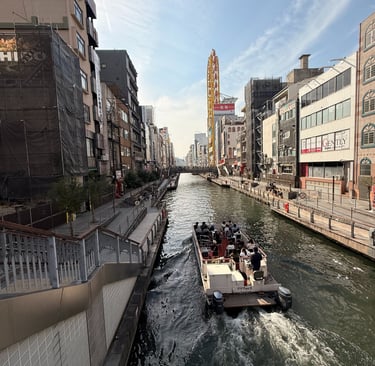
🎌 Osaka: Japan Turns the Volume Up
Osaka is vibrant, youthful, and just a little rebellious.
The nightlife hums
The food scene thrives
The energy is unmistakably playful
It may feel slightly less polished than Tokyo or Kyoto—but still remarkably clean by most standards.
🌴 Okinawa: A Different Japan Entirely
And then, just when you think you understand Japan… Okinawa enters the chat.
This is island life:
Turquoise waters
Soft white sand
A slower, more deliberate pace
🏝️ Okinawa Highlights
Snorkeling and diving in coral-rich waters that feel almost unreal
A day trip to the Kerama Islands—where the ocean looks edited, but isn’t
The Churaumi Aquarium, home to some of the ocean’s most majestic creatures
Cape Manzamo’s dramatic coastal cliffs
American Village, a curious and fascinating cultural blend
Okinawa is not just a destination—it’s a mood shift.