
The Travel Decision Formula: How We Pick Destinations, Dates, and Dealbreakers
Not all destinations make the cut — and that’s intentional. From climate and crowds to food, safety, vibes, and comfort levels, our travel choices are shaped by more than wanderlust alone. In this post, I’m sharing the exact framework we use to decide where, when, and why we travel — plus the non-negotiables we won’t budge on and the perks we always hunt for. Steal it, tweak it, and build your own travel rulebook.escription.
Nate
2/10/20265 min read
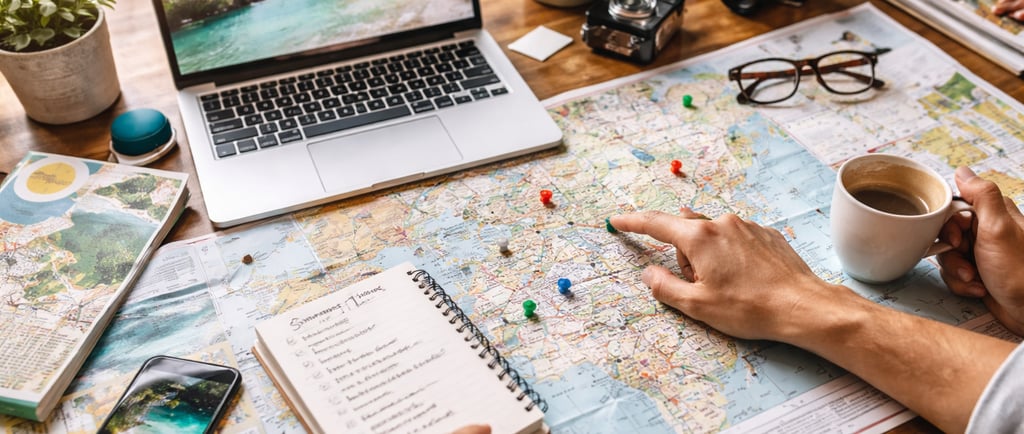
Every trip starts the same way in our house.
One of us casually says, “So… where should we go next?”
The other one opens Instagram.
Suddenly we’re mentally hiking in Patagonia, eating pasta in Rome, and sipping wine in some village we can’t pronounce — all within five minutes.
Travel planning is half excitement, half logistics, and half “Wait, how is this flight 27 hours long?” (Yes, that’s three halves. Welcome to travel math.)
My wife and I travel as a couple, but everything here applies just as well if you’re solo — because whether you’re traveling with a partner or with your own chaotic brain, the decision-making process is basically the same. So here’s exactly how we decide where to go, when to go, what we prioritize, what we refuse to tolerate, and what makes a trip a hell yes instead of a hard pass.
Let’s get into it.
Step 1: New Stamp or New Side of Somewhere Familiar?
First question we always ask:
Do we want a new passport stamp, or do we want to revisit a country we already love and explore deeper?
We’ve done both — and honestly, both hit differently.
Sometimes you want the thrill of stepping into a brand-new culture, hearing a language you don’t understand, and realizing you ordered something mysterious but delicious for dinner. Other times, you want to go back somewhere that already feels like home and finally visit the region you skipped the first time because you “ran out of time” (aka overcommitted).
Neither is better. It just depends on our mood — and how much brainpower we want to spend navigating something totally new.
Step 2: How Hard Is It to Get There… Really?
Next question:
Is this trip a direct flight situation, or is it a
plane → train → bus → ferry → questionable van → maybe a swim kind of journey?
Because both are valid — but they hit very differently depending on how much PTO we have.
We both work full-time, so sometimes we only get a week off. In those cases, we’re not trying to spend three of those days in transit eating airport snacks and questioning our life choices. We want maximum adventure, minimal logistics.
But when we have more time off? (Thank you, boss)
We’ll absolutely go farther, slower, and more complicated — because sometimes the journey really is part of the fun.
Step 3: Flights — Where We Splurge (And Why)
Let’s talk flights. Specifically: comfort vs. chaos.
We’ve done hardcore budget travel before — and we still will — but let me tell you about the trip that changed our lives.
Thailand.
We booked the cheapest possible route:
Two layovers.
Economy seats for every leg.
Including one glorious 15-hour flight.
The ticket price? Amazing.
My physical condition afterward? Questionable.
It took me days to recover from the jet lag. I was awake at 3 a.m. Googling noodle recipes and questioning time itself.
Since then, our philosophy has changed:
If you can afford a direct flight, or even just a shorter route, do it.
If you can upgrade even one leg, do it.
Your body, mood, and trip quality will thank you.
How We Book Flights
We use:
Google Flights for tracking and comparing prices
Some AI tools and deal trackers
Airline rewards programs when possible
We usually track prices for a month or two. When the cost drops into our budget range, we book. No hesitation. No second guessing. No “what if it gets cheaper?” spiral.
Pro tips we swear by:
Flying midweek (Tuesday–Wednesday) is often cheaper
Early morning or red-eye flights = better deals
Set price alerts — let the internet work for you
Bottom line: We ask ourselves, How quickly and comfortably can we get there?
That answer matters more to us than saving $150 and losing two days of our life.
Step 4: Research Mode: Activated
Before we book anything, we research like it’s our job — because honestly, it kind of is.
Accommodations
We use TripAdvisor heavily for hotel reviews — and this is key:
👉 Always look at traveler photos, not the professional ones.
If every room looks like it was photographed during golden hour with candles lit and a wine glass placed suspiciously on every surface… yeah, I’m suspicious. Show me the bathroom lighting. Show me the real balcony view. Show me the truth.
Bundling & Deals
We primarily use Expedia to bundle flights, hotels (yes, including multi-city trips), rental cars, and sometimes activities.
Bundling almost always saves money — plus Expedia’s One Key Cash rewards and upgrades have paid off for us more times than I can count. Free breakfasts, room upgrades, discounted stays — yes please.
Step 5: What Are We Actually Doing There?
Once we have a rough destination in mind, we move to the most important question:
What will our days actually look like?
We look at:
Restaurants we want reservations at
Historical sites and cultural experiences
Hiking trails and outdoor adventures
Day trips and excursions
Any adrenaline-fueled activities that make our moms nervous
If the destination doesn’t excite us when we imagine a random Tuesday there, it probably isn’t the right trip — no matter how pretty the Instagram photos are.
Step 6: Then We Research… Again 😅
After that, we zoom out and ask the logistics questions:
How easy is it to get from city to city?
Is public transportation reliable and easy to navigate?
What’s the weather actually like during the month we’re going?
Are we packing raincoats or sunscreen or both?
Is the destination safe right now?
We always check the U.S. State Department travel advisories. If crime is trending upward, political unrest is brewing, or things just feel off — we avoid. There are too many amazing places in the world to force one that doesn’t feel right.
Once everything checks out, we bundle it all together and start booking.
Cue the serotonin.
Step 7: Our Travel Preferences (AKA: The Things That Make or Break a Trip)
These are the little things that turn a good trip into a great one for us.
🌿 Location
We love staying within walking distance of downtowns, hotspots, or nature access. Being able to wander into coffee shops, bars, trails, or viewpoints without needing a car feels like freedom.
🏔️ Adventure
If there’s hiking, kayaking, snorkeling, skiing, or any way to get sweaty in beautiful surroundings — we’re in.
🍷 Food, Beer & Wine
Local breweries, vineyards, street food, hole-in-the-wall restaurants, regional specialties — this is how we connect to a place. Museums are cool. So is eating something we can’t pronounce but will dream about later.
🌍 Culture & Immersion
We want to feel like we’re in a place, not just passing through it. That means:
Local neighborhoods over tourist zones
Markets over malls
Conversations over checklists
🧭 Off-the-Beaten-Path Energy
We’re not anti-tourist — we’ll absolutely see the big landmarks — but we’re always chasing the quieter trails, the smaller towns, the places where the vibe feels less curated and more real.
Our Common Deal Breakers 🚫
Let’s talk about the things that make us instantly reconsider a destination.
❌ Peak Season Price Madness
If hotel prices triple, crowds are shoulder-to-shoulder, and dinner reservations require a spreadsheet and a prayer — we’re out. Shoulder season is elite and we will die on that hill.
❌ Dangerous or Unstable Conditions
If safety feels questionable, whether due to crime, unrest, or natural disasters — no thanks. Peace of mind is priceless.
❌ Brutal Weather Windows
We love adventure, but not:
Hurricane season
Monsoon season
115-degree heat with no AC
Freezing rain in cities meant for walking
Weather can absolutely make or break a trip.
❌ Logistics That Eat the Whole Trip
If it takes 18 hours and three border crossings to reach somewhere — and we only have six days total — that’s a no. Not because it isn’t worth it, but because timing matters.